[ad_1]
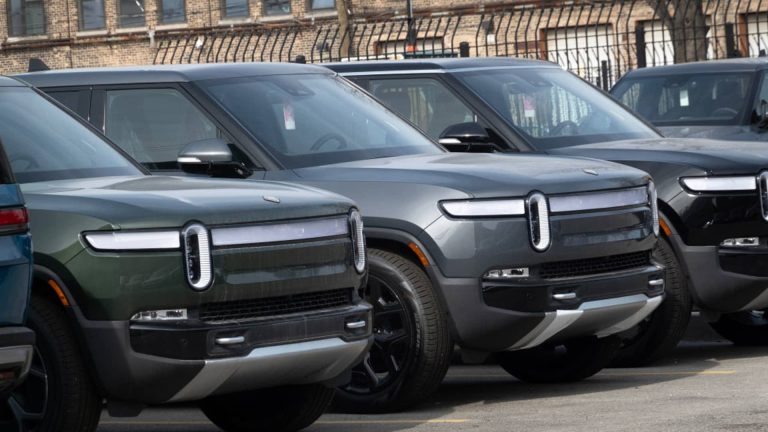
Rivian electrical autos sit in quite a bit at a Rivian facility in February 22, 2024 in Chicago, Illinois.
Scott Olson | Getty Pictures Information | Getty Pictures
Volkswagen’s $5 billion investment in electrical automobile startup Rivian is a “catch-up transfer” for the German automaker, however might take years to repay, in keeping with Cyrus Mewawalla, head of thematic intelligence at GlobalData.
Volkswagen and Rivian on Tuesday introduced that the German auto maker would make investments as a lot as $5 billion in Rivian within the coming years following an preliminary $1 billion funding.
Rivian shares had been up 42% in premarket buying and selling on Wednesday. In the meantime, Europe-traded shares in Volkswagen had been final down 2.6% as of 12:47 a.m. London time.
“Volkswagen has fallen behind in two areas, on electrical autos themselves, but in addition on autonomous driving and different software program throughout the automotive. And Rivian is powerful on each,” Mewawalla informed CNBC’s “Road Indicators Europe” on Wednesday.
The funding will subsequently assist Volkswagen in these areas, however the agency is notably behind within the electrical automobile house, he added.

Globaldata expects Volkswagen’s share of battery powered EVs to be simply 8% this yr, in comparison with an estimate of 15% for BYD and as much as 16% for Tesla, Mewawalla defined.
Volkswagen mentioned deliveries of all-electric autos had been down by 3.3% year-on-year in its 2024 first quarter results, citing market situations and shortages of components. The auto maker added that it delivered 136,436 all-electric autos within the first three months of the yr.
“I believe it will take a very long time to repay,” Mewawalla mentioned, referring to the funding. “While it is a catch up transfer for VW I believe it might take a number of years for it to make an impression on its, on its revenues.”
Volkswagen didn’t instantly reply to CNBC’s request for remark.

Rivian
Mewawalla signaled {that a} potential danger is that Rivian is targeted on premium automobiles, whereas many EV makers are centered on the mass market. This implies low cost, however high-tech Chinese language-made EVs are a menace, he mentioned.
Each the EU and U.S. have expressed issues about low cost Chinese language EVs flooding the worldwide market and crowding out Western corporations. The U.S. has raised tariffs on imported Chines EVs, whereas the EU has introduced provisional duties on them. China and the EU are anticipated to start talks on the difficulty.

[ad_2]
Source link