[ad_1]
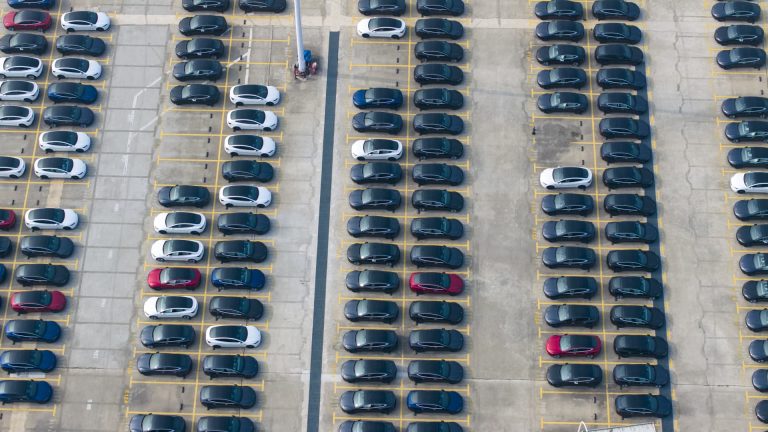
Newly produced electrical autos are being seen at Tesla’s Shanghai Gigafactory in Shanghai, China, on December 31, 2023.
Costfoto | Nurphoto | Getty Photos
BEIJING — New tariffs on Chinese language electrical vehicles aren’t sufficient to assist international automakers keep aggressive, particularly within the profitable China market, based on consulting agency AlixPartners.
China is the world’s largest auto market. It is taken the worldwide lead within the improvement of latest vitality autos, which embrace battery-only and hybrid-powered vehicles.
The NEV class now accounts for greater than 40% of latest passenger vehicles offered in China — and home automakers are largely main gross sales, with international corporations lagging behind.
Quite a lot of international automotive corporations nonetheless have not found out how their merchandise can stand out in China’s EV market, Stephen Dyer, co-leader and head of AlixPartners’ Asia automotive observe, stated throughout an annual trade outlook occasion on Wednesday.
“Except [foreign car brands] change their mindset of growing and manufacturing vehicles to at least one that’s extra prepared to take dangers, and think about the best way to design and manufacture a automotive from the so-called rules, their place will turn into more and more precarious,” Dyer stated in Mandarin, translated by CNBC.
German luxurious model Porsche said last Tuesday that China sales plunged by one-third within the first-half of the 12 months. The corporate blamed shoppers’ “give attention to worth oriented gross sales.”

Chinese language automakers from Nio to BYD have already began to export vehicles to Europe and different abroad markets, prompting the U.S. to raise tariffs on the vehicles from 25% to 100%.
The EU additionally introduced in June it might impose tariffs of up to 38% on Chinese language EV imports to fight the “risk of financial harm” to European EV makers. In response, China has stated it is in talks to “reach a mutually acceptable solution” with the European Fee forward of the tariffs’ implementation in November.
Even with the EU tariffs to come back, China vehicles will nonetheless make a revenue of 20%, based on Dyer, who famous that the revenue margin could be the identical as in the event that they have been offered in China’s market. That is as a result of the wave of tariffs will probably speed up China EV makers’ transfer to localize manufacturing methods in Europe that may lower transportation prices, he added.
BYD is opening a manufacturing facility in Hungary. Final week, the corporate introduced a $1 billion deal with Turkey, and opened its factory in Thailand.
At the moment, Chinese language-made EVs price 35% much less to provide than comparable autos from international automakers, based on AlixPartners.
Native partnerships
China has been a serious marketplace for lots of the world’s largest carmakers, which try completely different methods to retain their home gross sales.
Some international companies try to enter China’s market by partnering with native manufacturers. Dyer cited Volkswagen and Xpeng‘s inked partnership earlier this 12 months to launch an SUV which noticed the German automaker purchase almost 5% of Xpeng for $700 million final 12 months.
Different manufacturers try to chop costs.
Earlier this month, German automaker BMW launched a new Mini-Cooper EV in China by way of its three way partnership with Nice Wall Motor (GWM).
Based mostly on costs in China, the car’s retail worth begins on the equal of $26,140 — nearly 5% cheaper than the fuel-powered Mini Cooper 3-door’s worth of about $27,520.
Compared, BYD sells its cheapest EV, the Seagull, at a a lot lower cost of $9,700.
BMW introduced the primary electrical Mini Cooper in 2019, which started deliveries in China and Europe the next 12 months.
Whereas collaborations are “rational” to realize market share, Dyer stated it’s troublesome to remain within the China market long-term if international carmakers do not swap issues up.
Final month, an analyst from the Bank of America said U.S. automakers based in Detroit should exit China “as soon as they possibly can” as a result of they have been on the dropping finish towards China EV giants.
China’s NEV makers have additionally slashed improvement time for brand new fashions to twenty months — that is half the 40 months wanted by Chinese language legacy auto manufacturers, based on analysis by AlixPartners.

Chinese language NEV-dedicated manufacturers additionally roll out new fashions much more rapidly than non-Chinese language manufacturers, the analysis agency stated, noting the vehicles include tech and battery specs which can be about two to 3 years forward of what the international corporations have deliberate.
Electrical vehicles are much less advanced than inside combustion engine-powered autos. A serious trade problem has been convincing shoppers to purchase the battery-powered autos, primarily by decreasing nervousness about driving vary.
The Chinese language authorities has mandated nationwide development of battery charging stations, whereas startup Nio has rolled out battery swap stations that declare to provide drivers a full cost in only a few minutes.
One other drawback for international automakers is competing with native manpower, as Chinese language staff are much more prepared to tug lengthy hours.
China EV workers labored as much as 140 hours extra time monthly, excess of the 20 hours of extra work at conventional automotive corporations worldwide, Dyer stated, noting the Chinese language “spirit of having the ability to overcome hardship.”
With that drive, AlixPartners expects Chinese language manufacturers to take greater than 70% of the NEV market in China by 2030, and seize one-third of the worldwide auto market — or 9 million vehicles a 12 months.
[ad_2]
Source link