[ad_1]
Blocked from the U.S. by tariffs, Chinese language electrical automobile makers have appeared elsewhere to promote their high-tech automobiles. However as Mexico has emerged as a scorching spot for Chinese language EVs, Washington officers fear the nation could also be used as a “backdoor” to the U.S. market.
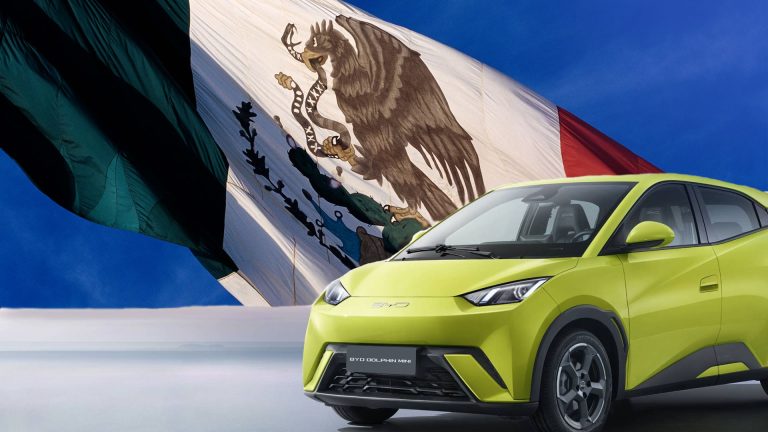
Final yr, China was the main automotive provider to Mexico, exporting $4.6 billion value of automobiles to the nation, in accordance with the Mexican Ministry of Economic system. Even clients cautious of EVs have been gained over by reasonably priced worth tags. Tesla rival BYD sells its Dolphin Mini in Mexico for round 398,800 pesos, or about $21,300, a bit of over half the worth of the most cost effective Tesla.
“The Chinese language automakers got here to the nation very aggressively,” stated Juan Carlos Baker, former Mexican deputy minister for worldwide commerce. “They’ve superb promotions. It is a good product that sells at a really cheap worth.”
Some Chinese language EV makers, together with BYD, have been on the lookout for an extra foothold in North America by exploring factory sites within the Mexican states of Durango, Jalisco and Nuevo Leon. The overseas funding could be an financial increase for Mexico. BYD has claimed {that a} plant there would create round 10,000 jobs.
However U.S. officers fear this could possibly be part of a bigger technique by Chinese language automakers to skirt commerce restrictions and enter the American market.
“Mexico is a beautiful manufacturing platform, not just for Chinese language firms, however for different firms as effectively, partly due to that free commerce entry that it has to the American market,” stated Scott Paul, president of the Alliance for American Manufacturing. “And it might do one thing that in commerce phrases is known as circumvention.”
That free commerce entry is a part of the United States-Mexico-Canada Settlement (USMCA), a revised iteration of the North American Free Commerce Settlement (NAFTA) that eliminated tariffs on many items traded between the North American international locations beginning in 2018. Underneath the settlement, if a overseas auto firm manufactures in both Canada or Mexico and may show that the constructing supplies are sourced domestically, the products could be exported to the U.S. just about duty-free.
“We have seen China do that in different kinds of manufacturing as effectively, from home equipment to auto elements to metal,” stated Paul. “For greater than a decade now, China, america have been enjoying a high-stakes sport of whack-a-mole in the case of commerce coverage tariffs.”
Whereas assembly the USMCA necessities is tough, the potential situation terrifies U.S. lawmakers and auto firms.
“If [Chinese EV makers] are capable of arrange in Mexico, they might undoubtedly pose an imminent menace to American automakers, if for no different cause, as a result of their prices could be decrease,” stated Michael Dunne, CEO of Dunne Insights.
In Could, President Joe Biden announced a 100% tariff on Chinese EVs.
“We [the U.S.] are simply beginning to scale up our EV trade, so it is what I name an ‘toddler trade,'” stated Paul. “And like several toddler, it is at a really delicate time by way of growth and must be massively protected.”
Consultants say strain from the U.S. leaves Mexico in a tough place of sustaining its essential relationship with America with out being overly pleasant to Chinese language funding.
Watch the video to be taught extra about how Mexico has turn into a scorching spot for Chinese language auto firms and the way the subsequent administration could impression EV commerce insurance policies.
[ad_2]
Source link