[ad_1]
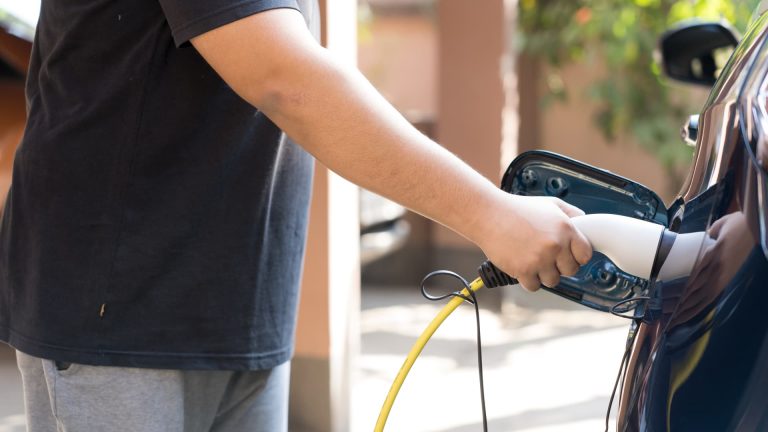
Younger Man charging his electrical automobile.
Tashdique Mehtaj Ahmed | Second | Getty Photos
When Carmelita Fernandes, who lives within the Indian metropolis of Pune, first made the change from her common automobile to an electrical Tata Nixon in December 2021, she was excited for the journeys that will observe. In spite of everything, it was a “five-star rated automobile and gross sales have been actually skyrocketing in India” on the time, she stated.
A bit of over two years after the change, Fernandes regrets her choice: “I will by no means ever purchase an electrical automobile once more.”
Within the first 5 months after the acquisition, Fernandes’ automobile battery died midway when she was on a 180-kilometer (111 miles) drive from Pune to Bombay, two cities within the western state of Maharashtra.
The battery of the EV SUV that value her 1.4 million Indian rupees ($16,700) tended to deplete quicker than anticipated. “A 4India’s EV conundrum: To spend money on automobiles or charging factors first0% cost ought to simply take me for an additional 40km, but it surely dropped to 0% inside 5km,” Fernandes stated.
“If I am unable to drive for 4 to 5 hours from Mumbai to Pune, I do not suppose I can use the EV wherever. It’s going to be inconceivable to go to additional cities like from Mumbai to Goa that are about 600km away from one another,” she advised CNBC.
Fernandes’ story just isn’t distinctive. In India, “Vary anxiousness” stays a big hurdle stopping drivers from making the transition from inside combustion engine to EV automobiles, analysts stated.
The world’s most populous nation has an ambitious goal for 30% of newly registered personal automobiles to be electrical by 2030. Nonetheless, out of round 4.2 million passenger autos offered final yr, lower than 2.5% have been EVs, based on Bain & Firm, an trade consulting agency.
“Charging infrastructure in India’s electrical automobile market continues to be not absolutely developed, however corporations need extra autos on the highway earlier than they make investments extra. Alternatively, potential electrical automobile consumers first need extra chargers on the highway,” stated Brajesh Chhibber, accomplice at McKinsey India.
“It is a chicken-or-egg drawback on which ought to come first,” Chhibber advised CNBC.
As of August 2023, Tata Motors dominated 72% of India’s EV market, adopted by MG Motors with with a ten.8% share. EVs from Mahindra & Mahindra, Citroen, BYD, Hyundai and Kia make up the remainder of the market, knowledge from Canalys confirmed.
Rising charging capability
Boosting India’s charging infrastructure is a crucial step that the federal government must take to succeed in its purpose of constructing electrical autos widespread by 2030, trade consultants advised CNBC.
After the U.S., India has the world’s second-largest road network, spanning 6.3 million kilometers.
Nonetheless, as of February, there have been roughly 12,100 public EV automobile chargers on the planet’s most populous nation, nonetheless removed from the 1.32 million chargers wanted by 2030.
However charging corporations are hesitant to scale up infrastructure for concern that they’d be underutilized, stated Mihir Sampat, accomplice at Bain & Firm in Mumbai.
“The economics of working a charging level station are basically pushed by how a lot your chargers are utilized,” Sampat stated. “You ideally need chargers to be utilized no less than 15-20% of the time. And for that, chargers must be in an space with a dense EV inhabitants.”
There are round 200 EVs per business charging level in India, as in comparison with roughly 20 within the U.S. and fewer than 10 in China, according to a report published by Bain in December of last year.
Fernandes recounted how she would cease on the Khalapur Toll Plaza, on the Mumbai-Pune expressway, throughout her journeys from Bombay to Pune to cost her EV. The chargers needed to be booked lengthy prematurely or she could not use them in a well timed method.
“It might typically ask me to attend for greater than two hours to cost my automobile,” she stated. “I find yourself utilizing extra energy and losing my battery by searching for a charger.”
Though the Indian authorities has made important strides to extend the variety of EV chargers on highways, infrastructure for intercity utilization close to purchasing malls and workplace buildings must be ramped up too, McKinsey’s Chhibber added.
Different setbacks driving customers away
An absence of charging infrastructure just isn’t the one drawback EV drivers are going through. Excessive prices and low selection in fashions are two different components conserving drivers from making the change from ICE to EV automobiles, analysts stated.
Maurti Suzuki, India’s largest carmaker, will solely be releasing its first EV automobile mannequin subsequent yr. Whereas Tata solely provides 5 EV automobile fashions, and MG Motors provides two, the corporate’s web sites confirmed.
“Clients are pushing again on making the change to EVs and are ready for brand spanking new merchandise and a wider portfolio to return,” Chhibber stated.
“India stays a really worth delicate four-wheeler market. Corporations are going to need to develop decrease value EVs which can be akin to ICE automobiles,” Bain & Firm’s Sampat stated, including that battery prices first want to return down.
The value of considered one of Tata’s Punch, considered one of its hottest ICE SUVs, begin at 612,900 Indian rupees ($7,300), in comparison with its EV counterpart with a beginning worth of 1.1 million Indian rupees ($13,100)
[ad_2]
Source link