
[ad_1]
Sollina Pictures | Tetra Pictures | Getty Pictures
Amid file excessive inflation, stretching Social Safety profit checks grew to become harder in 2022.
Whilst a 5.9% cost-of-living adjustment went into impact in January, the file excessive annual profit enhance nonetheless fell quick, based on new analysis from The Senior Residents League.
The typical retiree profit elevated to $1,656.30 in 2022 from $1,564 in 2021 — a month-to-month increase of $92.30, based on the nonpartisan senior group. But in each month this 12 months, an even bigger enhance was wanted to maintain up with hovering prices as a consequence of inflation, the analysis discovered.
The typical retiree profit fell quick by a median of $42.35 monthly, or 46%, the analysis discovered. Over the course of the 12 months, that added as much as $508.20.
Social Safety’s annual cost-of-living adjustment, or COLA, is predicated on the Client Value Index for City Wage Earners and Clerical Staff, or CPI-W. The annual change is calculated based mostly on the index’s common for the third quarter, which is in comparison with the third-quarter common for the earlier 12 months.
The 5.9% annual enhance for 2022 was the best bump to advantages in 40 years when it was introduced in October 2021.
In January, beneficiaries can anticipate to see an even higher increase — 8.7% — that can high final 12 months’s file.
But as inflation outpaced the COLA for 2022, households ages 65 and up discovered it harder to pay for on a regular basis objects.
‘Even the best of meals are tougher … to afford’
The fastest-growing price was house heating oil, which spiked 68% from October 2021 to October 2022, based on The Senior Residents League.
That was adopted by airfares, which climbed 42.9% in that time-frame; flour and ready mixes, which rose 24.6%; medical health insurance, 20.6%; and pure gasoline, 20%.
Different key classes that noticed huge value jumps included oil adjustments and coolant, canned vegatables and fruits, soups, turkey, and pet meals.
“Even the best of meals are tougher for folks to afford,” stated Mary Johnson, Social Safety and Medicare coverage analyst at The Senior Residents League.
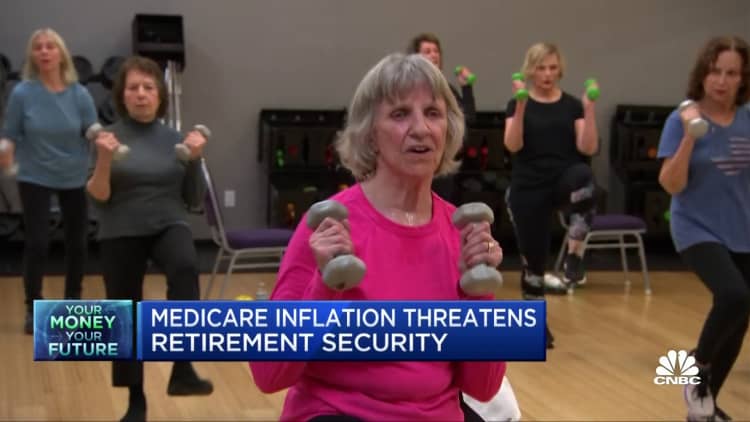
For low-income retirees who’ve spent down their retirement financial savings, absorbing these larger prices could also be significantly troublesome, she famous.
Medicare Half B additionally noticed larger will increase in 2022, with the usual premiums going up by 14.5% to $170.10 monthly. These month-to-month premiums are sometimes deducted instantly from Social Safety checks.
As 2023 approaches, Social Safety beneficiaries can be poised to see extra of the file 8.7% enhance that goes into impact, as commonplace Medicare Half B premiums decline by 3% to $164.90.
“The excellent news … is persons are realizing 100% of the 8.7% elevate,” David Freitag, a monetary planning guide and Social Safety skilled at MassMutual, recently told CNBC.
Extra from Private Finance:
Here’s the inflation breakdown for November 2022
401(k) ‘hardship’ withdrawals hit record high, Vanguard says
‘Risky behaviors’ are causing credit scores to level off
The average retiree benefit will go up by $146 monthly, to $1,827 in 2023 from $1,681 in 2022, the Social Safety Administration stated in October. (That is larger than the common retirement profit quantity from January that The Senior Residents League utilized in its calculations. The typical retiree profit tends to alter all year long as new beneficiaries begin receiving advantages, based on Johnson.)
The company is at present sending statements to beneficiaries that embrace the precise quantities of their will increase for subsequent 12 months.
“The COLA goes to spice up their advantages actually by a file quantity,” Johnson stated.
“That is the most important one that the majority retirees alive at the moment have ever acquired,” she stated.
Simply how far that extra cash goes subsequent 12 months will rely on how inflation fares within the coming months.
If larger costs subside, that will level to a decrease cost-of-living adjustment for 2024, Johnson stated. An actual measurement can be based mostly on CPI-W knowledge for the third quarter of subsequent 12 months.
[ad_2]
Source link